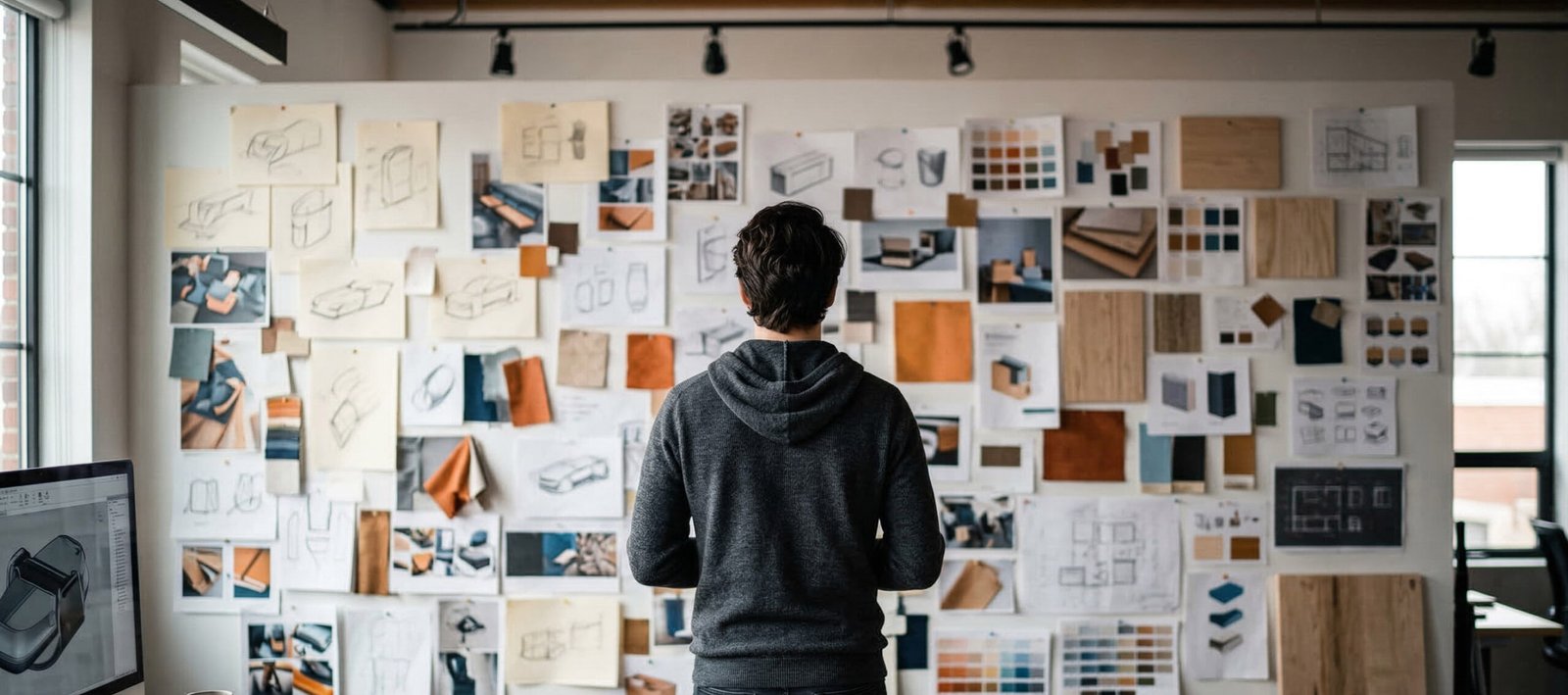
During a recent prototype review, I looked at a flawless, photorealistic render on the studio monitor and felt a familiar, sickening drop in my stomach. I didn’t actually draw that, I thought. An algorithm did. Am I even a real designer anymore?
If you are an industrial designer working today, you’ve probably felt this exact brand of dread.
The truth is, imposter syndrome in design is nothing new. Even before AI entered the chat, I felt it. I would sit in boardrooms, managing a multi-disciplinary team for a massive corporation, secretly terrified that someone would realize my marker sketches weren’t as crisp as the junior designer’s next to me.
But the sudden irruption of AI tools has poured gasoline on that anxiety. When a machine can generate a concept in four seconds that would have taken you four hours, it forces a brutal identity crisis.
Here is the honest, uncomfortable truth we need to face: We are not fine artists. We are designers. And the sooner we accept the difference, the faster we can use AI to do our actual jobs better.
The Difference Between AI Laziness and AI Leverage
I was highly skeptical of AI until early 2024. I thought it was a gimmick that generated generic, soulless mood boards.
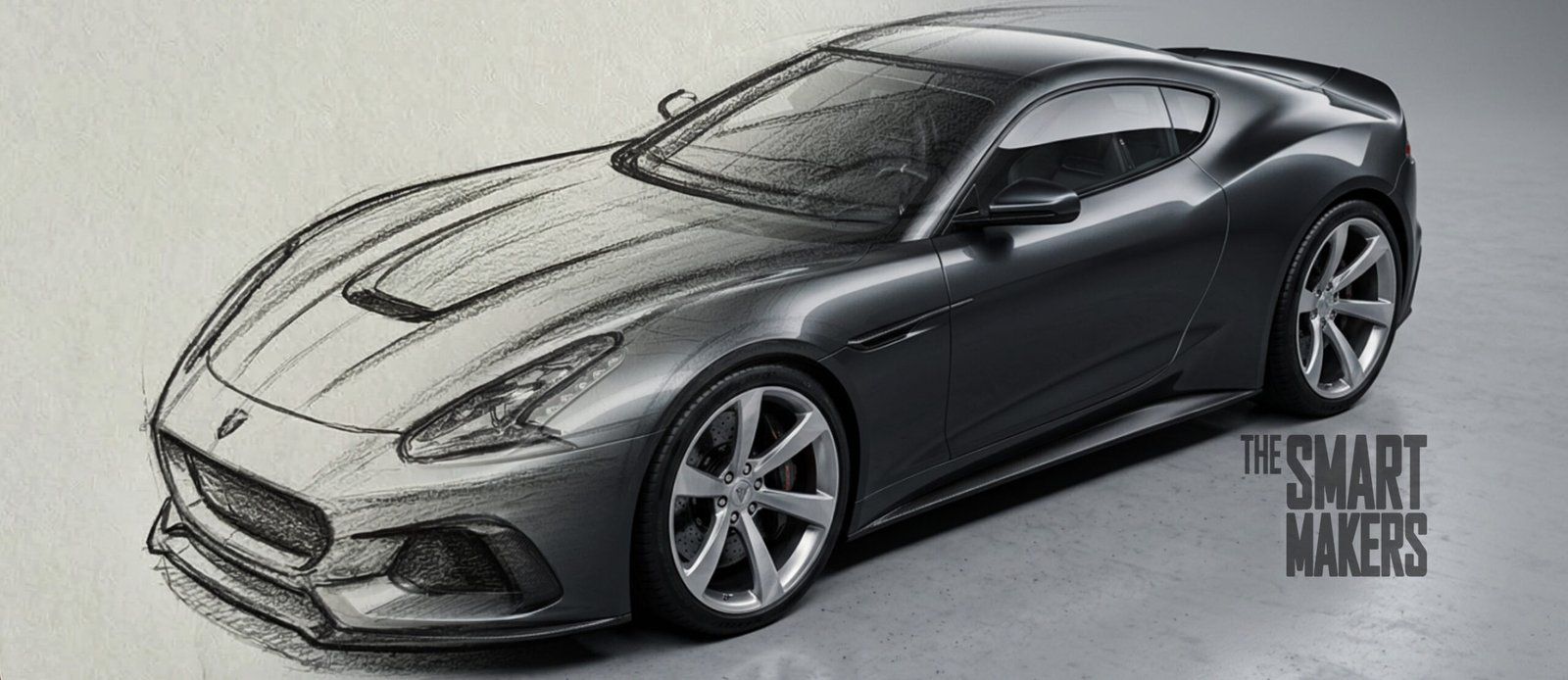
Then I hit a wall. My team was facing an impossible rendering deadline, and out of pure desperation, I fed my messy napkin sketches into Vizcom and Midjourney. That was my lightbulb moment. The tools didn’t replace my ideas; they just executed the tedious visualization phase instantly.
However, we need to be highly critical of how these tools are being adopted in the industry right now. There are two types of AI users emerging:
- The Prompt Jockeys: These are the people using AI out of pure laziness. They type «cool futuristic sneaker» into a prompt box, download the PNG, and call themselves designers. They have no understanding of manufacturing constraints, ergonomics, or material science.
- The Process Hackers: These are the designers using AI to eliminate the administrative and illustrative bottlenecks of the job. They use AI so they can spend more time actually designing.
«AI will not replace designers. It will replace illustrators who pretend to be designers.»
Stop Illustrating, Start Solving
Let’s be brutally honest about what industrial design actually is.
Our job is not to create beautiful illustrations that get likes on Instagram. Our job is to solve physical, logistical, and human problems. We figure out how a product feels in the hand, how it survives an injection molding process, and how it solves a real user pain point.
When you spend six hours meticulously rendering the lighting on a polycarbonate shell in KeyShot, you are not designing. You are illustrating. AI is the ultimate antidote to this time-drain. By handing the «illustration» phase over to an algorithm, you reclaim hours of your day. You can take that reclaimed time and invest it where it actually matters:
- Iterating on the physical ergonomics of a 3D-printed model.
- Negotiating with overseas suppliers to hit your target BOM cost.
- Researching sustainable material alternatives.
How I Use AI to Cure the Imposter Syndrome
When I feel the imposter syndrome creeping in, I remind myself that my value is in my taste, intuition, and physical experience. AI has no lived experience. It has never felt the frustration of a poorly balanced tool or the cheap plastic creak of a bad hinge.
I am the guardian of good taste. The AI is just my very fast, very obedient intern.
Here is how I structure my workflow to ensure I am still the one doing the heavy lifting:
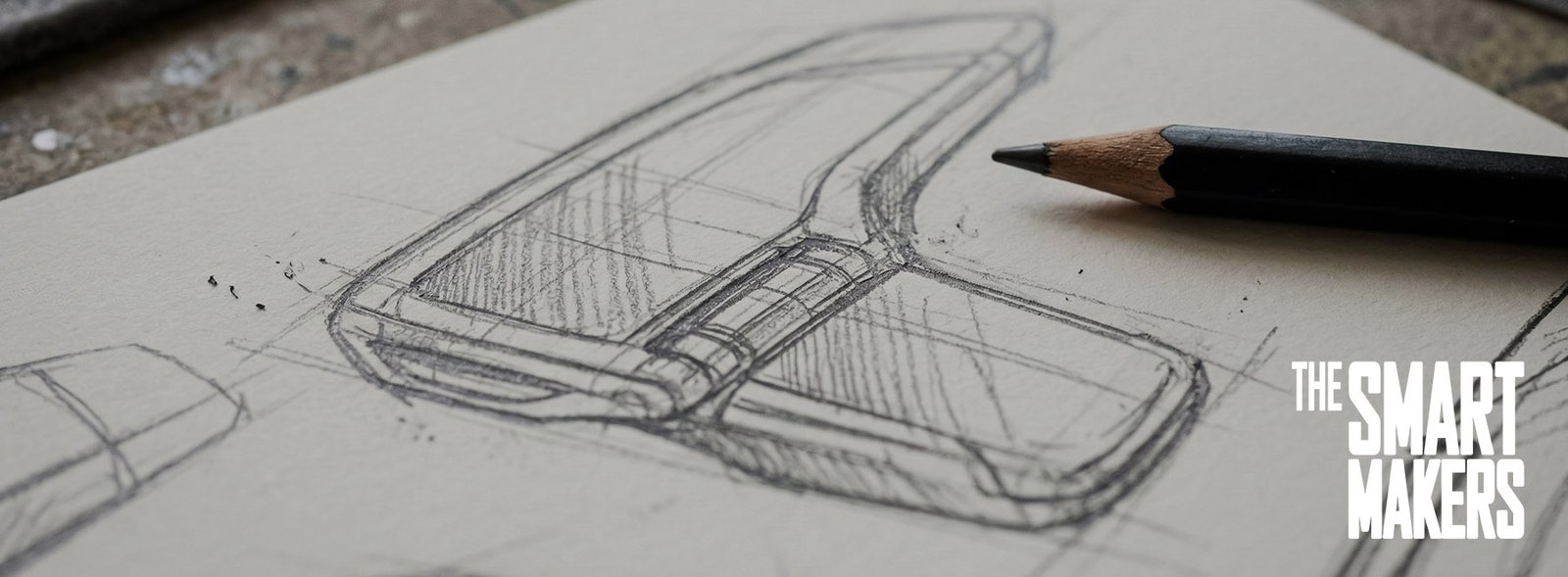
- Ideation is Human: I still start with a pen. I use my tablet to rapidly sketch the core geometry and problem-solving mechanics of the product. The initial thought is entirely mine.
- Visualization is AI: I feed those rough sketches into Vizcom to instantly visualize the forms in different materials and lighting conditions. I don’t waste time rendering manually.
- Refinement is CAD: Once the AI helps me lock in the visual direction, I move into Creo to build the actual, manufacturable geometry.
By structuring my process this way, the imposter syndrome vanishes. I know I am driving the ship.
The Future Belongs to the Builders
If your entire self-worth as a designer is tied to how well you can render a drop-shadow, the next five years are going to be terrifying.
But if you view yourself as a strategic problem solver, a creator who bridges the gap between human needs and physical reality, this is the most exciting time in history to be alive. Let the AI handle the pretty pictures. Use your time to build real products.
Have you felt the AI imposter syndrome creeping into your studio? Let me know in the comments how you are navigating this shift. Are you fighting the tools, or are you hacking your process?
About the Author: I am a professional Industrial Designer, e-commerce entrepreneur, and design team manager. With over 20 years of experience bridging the gap between sketching, CAD, and manufacturing, I now explore how Artificial Intelligence is reshaping the way we build physical and digital products.