I spent three hours last Tuesday in a cross-departmental “alignment” meeting, arguing over some small details on our design. By the time we finally get it approved, a Chinese automotive startup had probably designed, simulated, and greenlit an entire EV dashboard.
The uncomfortable reality in Western design (and product development) culture is that we have a speed problem.
In our pursuit of perfection, we tend to over-intellectualize. We build massive, bureaucratic “waterfall” approval processes. We schedule meetings to plan other meetings. Meanwhile, a massive shift is happening in the East, completely rewriting the global playbook for industrial designers, engineers, and e-commerce hardware brands.
They call it “China Speed.” And if European and American brands don’t learn how to adapt to it, we are going to be left in the dust.

The 24-Month Miracle
Historically, developing a new car in Europe or the US has been a grueling 4 to 5-year process (roughly 200 to 220 weeks). It requires agonizingly slow, sequential hand-offs: design finishes a clay model, engineering figures out the chassis, supply chain takes a year to source parts, and software is treated as an afterthought.
Today, Chinese EV makers like NIO, XPeng, and BYD are compressing that entire lifecycle into 16 to 24 months.
How? It’s not just about working longer hours or leaning on government subsidies. It is a fundamental, cultural shift in workflow:
- Synchronous Engineering: They don’t wait for one department to finish before the next begins. Design, software, and battery integration happen in parallel.
- Digital Reliance: They use AI and advanced simulations to bypass dozens of physical prototyping phases.
- The “Fail Fast” Mentality: They treat cars like smartphones. They ship hardware that is “good enough” and deploy Over-The-Air (OTA) software updates to fix bugs and add features post-launch.
How Europe is Fighting Back: The Renault Twingo Experiment
Western legacy brands are finally waking up, and the smartest ones aren’t fighting “China Speed”, they are weaponizing it.
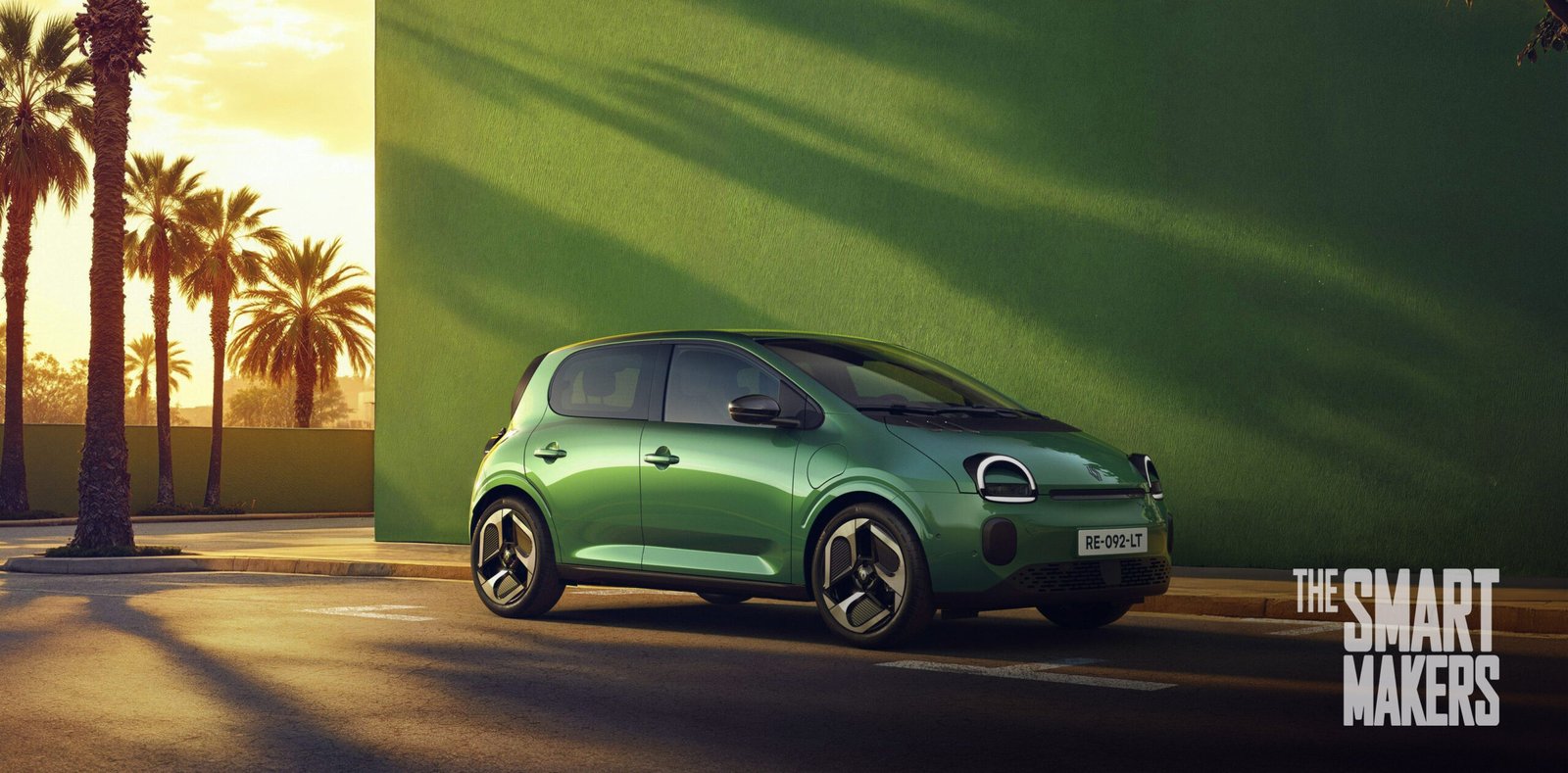
Take the upcoming 2026 Renault Twingo E-Tech. Renault knew that to compete with a flood of sub-€20,000 Chinese EVs, their traditional 4-year development cycle wouldn’t survive. So, they radically changed their architecture.
Renault established the Advanced China Development Center (ACDC) in Shanghai specifically to tap into this hyper-efficient ecosystem. But they didn’t outsource their soul. The core design, the nostalgic retro-styling, and the foundational AmpR platform were tightly controlled in France.
Once the vision was locked, the Shanghai ACDC team took over to execute the engineering, source the LFP batteries, and integrate the powertrain at breakneck speed. Final assembly will happen in Slovenia.
The result? The Twingo went from a concept freeze to a production-ready vehicle in just 21 months. It is a masterclass in hybrid workflows: Western emotional design and heritage, combined with Eastern execution and agility.
Applying “China Speed” to Your Own Studio
You don’t need to be a multi-billion-dollar automaker to learn from this. Whether you are an industrial designer at a mid-sized agency or an e-commerce entrepreneur trying to launch a new physical product, you can adopt this framework today.
Here is how we hack the process in my studio:
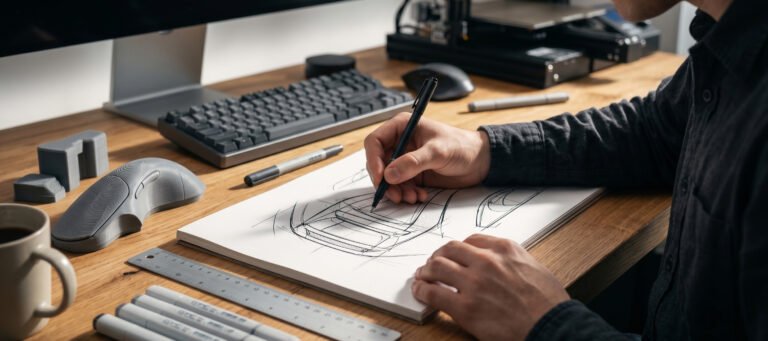
1. Kill the Waterfall Stop waiting for a perfect 2D sketch to start CAD, and stop waiting for perfect CAD to start physical testing. Work concurrently. I use pencil and paper or my XPPen Artist Pro to sketch ideas while I simultaneously have a rough block-model open in a 3D software. If the proportions feel wrong in 3D, I instantly adjust the 2D sketch.
2. Bring Rapid Prototyping In-House You cannot move fast if you are waiting three weeks for a supplier in Shenzhen to mail you a physical sample. You need to fail fast on your own desk. Investing in a high-speed, plug-and-play desktop printer allows you to test geometries overnight, drastically reducing the time spent arguing about tolerances in a meeting room.
3. Use AI for the Heavy Lifting Chinese studios rely heavily on digital simulations to skip physical steps. We do the same with visualization. Instead of spending two days manually rendering a concept in KeyShot just to show a client, we run raw CAD screenshots through Vizcom or other AI tools to get photorealistic, directional feedback in seconds.
The Takeaway
The goal here is not to blindly copy overseas competitors, nor is it to abandon the meticulous craftsmanship and emotional resonance that defines great Western design. As designers, our greatest asset is still our intuition, we are the guardians of good taste.
But all the good taste in the world doesn’t matter if your product takes so long to develop that the market moves on without you. We have the technology, the AI, and the rapid prototyping tools to build faster than ever before.
So tomorrow morning, when you get that calendar invite for another hour-long “synergy check-in,” hit decline. Fire up your 3D printer, open your CAD software, and just start building. The future belongs to the fast.
About the Author: I am a professional Industrial Designer, e-commerce entrepreneur, and design team manager. With over 20 years of experience bridging the gap between sketching, CAD, and manufacturing, I now explore how Artificial Intelligence is reshaping the way we build physical and digital products.