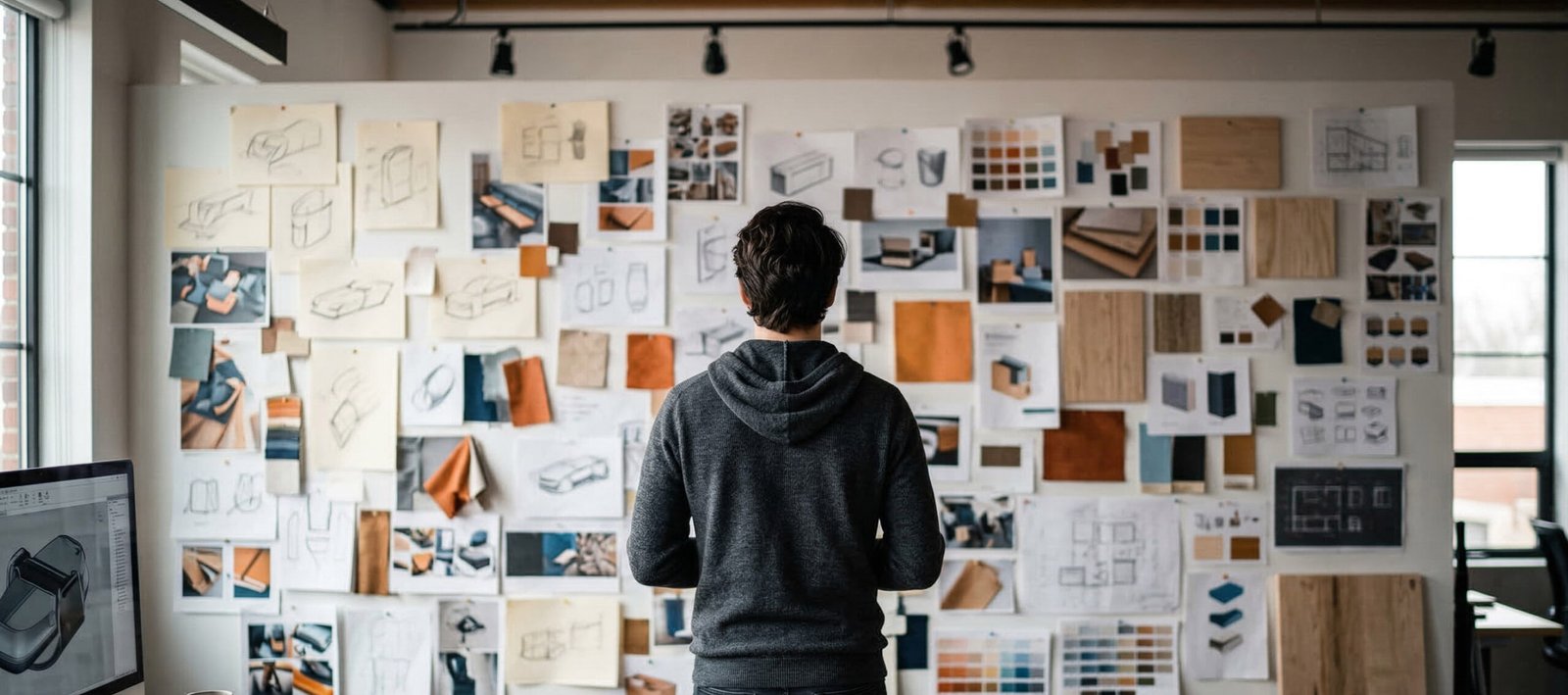
Most people think Industrial Design is about sketching sleek chairs and futuristic cars. They see the glossy renders on Behance and think it’s all “vibes” and aesthetics.
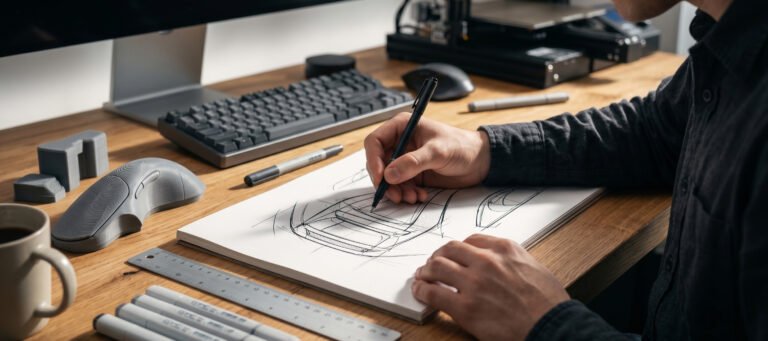
Here is the truth: I started sketching cars when I was 10 years old, obsessed with the way lines could dictate speed. Today, I lead a multi-disciplinary design team at a major corporation. I’ve seen the industry from the inside out, from the adrenaline of a successful launch to the crushing frustration of great ideas not seing the light.
If you are asking if ID is a good career, the answer isn’t a simple “yes.” It’s a “yes, but only if you have the stomach for it.”
The “High” of the Physical
There is a specific kind of magic in ID that you simply don’t get in UX or graphic design.
- You shape reality, You aren’t just moving pixels around a screen; you are deciding the weight, texture, and ergonomics of the objects people hold every single day.
- Every project is a new world. One month you’re deep-diving into medical device sterilization, the next you’re figuring out the hinge tension on a high-end laptop. If you have a restless mind, this is your playground.
- If you’re the type of person who needs to build, this job is a gift. There is no feeling quite like walking into a store and seeing a product you fought for sitting on a shelf.
The Hard Truth: It’s Not All “Good Taste”
I’ve spent enough time on factory floors and in heated boardrooms to know that the “Industrial” part of the title often outweighs the “Design” part.
1. The Quality vs. Quantity Grind
Being a “good” designer is exhausting. The level of detail required, from CMF (Color, Material, Finish) specifications to manufacturing tolerances, is immense. If you aren’t obsessive about quality, the industry will spit you out. The schedules are demanding, and the pressure to deliver “the next big thing” on a tight budget is real.
2. The Respect Gap
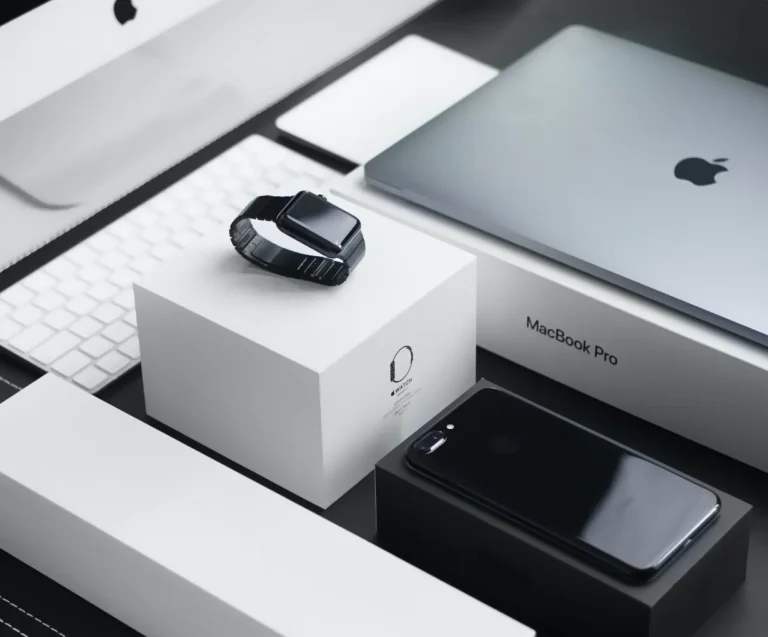
Not every company is Apple or Teenage Engineering. You will encounter CEOs who view designers as “beautifiers” rather than strategists. I’ve been in positions where I had to fight tooth and nail just to explain why a radius mattered for user comfort.
“Industrial Design is often a battle between the soul of the product and the constraints of the spreadsheet.”
3. A Competitive, Niche Market
Let’s be real: there are fewer chairs to design than there are apps to build. Because many companies still don’t fully “get” design, the pool of high-quality positions can feel small. You have to be more than a designer; you have to be a Smart Maker, someone who understands the business and the tech.
The Double-Edged Sword: Constant Learning
In my studio, the tools we used two years ago are already becoming obsolete.
I’ll admit, I was an AI skeptic until quite recently. Then I hit a deadline that seemed impossible. I integrated AI and years of experience into my concept phase, and my workflow transformed overnight.
- The Good: You will never be bored. You’ll be mastering Blender one day and diving into generative fluid dynamics the next.
- The Bad: If you want a job where you can “clock out” and stop learning, stay away from ID. You are in a race with technology, and the moment you stop running, you become a relic.
The Verdict: Should You Do It?
Forget the old debate about whether ID is a “good career.” The real question is: Are you willing to become a Full-Stack Maker?
The days of the designer who “just sketches” are over. The future belongs to the person who can use AI to ideate at lightning speed, jump into Blender or Vizcom to build the geometry, and then understand the e-commerce side well enough to help a product succeed.
If you are someone who loves the intersection of hardware and software, and you’re willing to be the “guardian of good taste” in a world of AI-generated clutter, then yes, this is the best job on the planet. You aren’t just designing products; you’re designing the future of how we live.
About the Author: I am a professional Industrial Designer, e-commerce entrepreneur, and design team manager. With over 20 years of experience bridging the gap between sketching, CAD, and manufacturing, I now explore how Artificial Intelligence is reshaping the way we build physical and digital products.